Control and Coordination
Why This Matters
Touch a hot pan. Your hand jerks back fast. It moves even before you feel the pain. See a ball flying at your face? You blink at once. You did not decide to blink — it just happened. Smell food and your mouth fills with water on its own.
So your body is always doing two things. It is sensing the world around you. And it is responding to what it senses. A “sense” here just means picking up some change, like heat or light or sound. A “response” is what your body does about it, like pulling your hand away.
There is one more important point. Your body responds in the right way. When you talk to a friend in class, you whisper. You do not shout. That “right way” is the whole point of this chapter.
Your responses are not random. They are controlled and coordinated. That means the correct change leads to the correct response, at the correct speed. Pulling your hand off a flame must be instant. But growing toward sunlight can take days. Different jobs need different speeds.
Your body manages all this with two systems that work together. One is the nervous system. It is fast and works like wires carrying electric signals. The other is the hormonal system. It is slower and uses chemicals that travel in the blood. Plants have no nerves and no muscles at all. Yet they too manage control and coordination, using only chemicals and clever growth. This chapter is about how all living things keep themselves in order.
The Big Idea
Living things survive by sensing changes around them and then giving the right response. A change that the body senses is called a stimulus. For example, heat from a flame is a stimulus. Animals use two systems. One is a fast electrical system (the nerves) for quick responses. The other is a slower chemical system (the hormones) for slow, body-wide changes. Plants use only chemicals and growth in a certain direction.
Why have two systems? Why not just one? Here is the reason.
Electrical signals in nerves are super fast. But they only reach the cells that nerves are joined to. Also, a nerve cell needs a short moment to “reset” before it can fire again. So nerves are fast, but local.
Chemical messengers (hormones) are slower. But they travel in the blood, so they can reach every cell in the body. They can also keep acting steadily for a long time. So hormones are slow, but everywhere.
One system is fast and local. The other is slow and everywhere. Together they cover every kind of situation. Keep this simple difference in mind. Then the neuron, the reflex, the brain, and every hormone in this chapter will make sense.
Let’s Break It Down
The neuron and the nerve impulse
Before we meet the nerve cell, let us be sure about what a “cell” even is.
The nervous system is made of nerve cells. A nerve cell is called a neuron. A neuron is just a special cell that carries messages. Information flows through a neuron in one fixed direction only. Figure 6.1 below shows the parts of a neuron and the path the signal takes. Let us follow that path step by step.
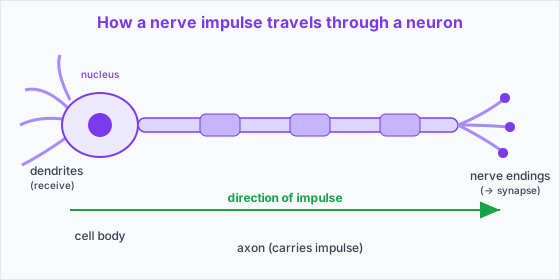
- First, receptors pick up the stimulus. A receptor is a part that detects a change. Receptors sit in your sense organs — the tongue, nose, ear, skin and eye. For example, heat receptors in your skin pick up heat from a flame. (Two names you may meet: receptors for taste are called gustatory; receptors for smell are called olfactory.)
- Next, the signal turns into an electrical impulse. An impulse is just a tiny electrical signal that moves along the neuron. It starts at the tip of the dendrite. Dendrites are the thin branches at one end of the neuron that take in the signal. The impulse then travels to the cell body (the main, rounded part of the cell). From there it goes along the axon, which is the long, thin tail of the neuron.
- Finally, the impulse reaches the end of the axon. Here it makes the neuron release some chemicals. These chemicals cross a tiny gap called the synapse (say it: “SIN-aps”). On the other side of the gap, they start a fresh impulse in the next neuron. Or they may tell a muscle to act.
Notice why the signal can travel only one way. The chemicals are let out on the sending side. They are taken in on the other side. They are never let out the other way round. So the synapse works like a one-way gate. The signal cannot go backwards. Figure 6.2 below zooms in on this gap.

Reflex actions: the shortcut
A reflex action is a quick, automatic response that you do without thinking. Pulling your hand off a hot pan is a reflex.
Why do we need reflexes? Think about touching something hot. If you waited for your brain to “think it through”, that would take too long. You would get burnt first. So the body uses a clever shortcut. This shortcut is called a reflex arc.
Here is how it works. The nerve carrying the signal in connects to the nerve carrying the response out. They connect right inside the spinal cord. The spinal cord is the thick cord of nerves that runs down your back. So the brain is skipped for the quick action. The message does still travel up to the brain too. But by the time the brain knows about it, the hand has already moved. Figure 6.3 below traces the whole loop.
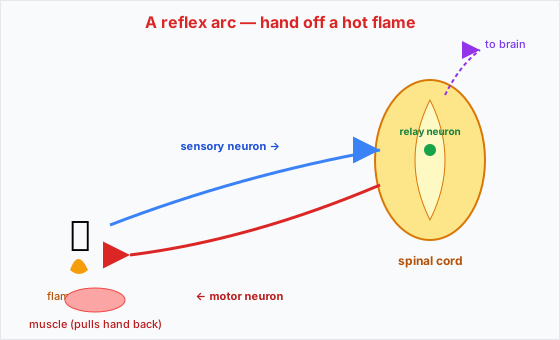
Here is the full path the signal takes: receptor (in the skin) → sensory neuron → relay neuron (in the spinal cord) → motor neuron → effector (the muscle). Let us name these parts. A sensory neuron carries the signal in, from the sense organ. A relay neuron sits in the spinal cord and passes the signal across. A motor neuron carries the signal out, to the muscle. An effector is the part that does the action — here, the muscle that pulls your hand back.
Reflexes first appeared in living things because thinking is just not fast enough for danger. And they are still faster than thinking, even today.
The human brain
The brain and the spinal cord work together as the main control room. Together they are called the central nervous system, or CNS for short. All the other nerves spread out from the CNS to the rest of the body. These outer nerves are called the peripheral nervous system. (“Peripheral” just means “on the outside”.) The brain itself has three main parts.
Before we list what each part does, it helps to see where each one actually sits inside your head. Figure 6.4 below shows the brain from the side, with every part labelled and its job written right next to it.

Now the same three parts, boiled down into one table you can revise from quickly.
| Region | Main jobs |
|---|---|
| Fore-brain (cerebrum) | Thinking, deciding; receiving & interpreting sight, smell, hearing; voluntary actions; hunger centre |
| Mid-brain | Some involuntary actions (e.g. reflexes of the eye) |
| Hind-brain — cerebellum | Precision & balance: walking straight, riding a cycle, posture |
| Hind-brain — medulla | Involuntary vital actions: heartbeat, breathing, blood pressure, salivation, vomiting |
The brain is soft and easily hurt, so the body keeps it safe. The brain sits inside the bony skull, also called the cranium. A layer of fluid around it works like a cushion. The spinal cord is also protected. It runs inside the vertebral column, which is the chain of bones in your back. We also call it the backbone.
How do muscles move us? When an impulse reaches a muscle, something happens inside the muscle cells. The muscle cells contain special proteins. These proteins change their shape and the way they are arranged. Because of this, the muscle cells get shorter. When the cells shorten, the muscle pulls. That pull is the movement you see.
Before moving on, let us test the most important idea so far — why a reflex beats thinking for speed.
Why is a reflex action faster than a deliberate, thought-out action like moving a chair?
A reflex uses a short reflex arc in the spinal cord. There, the sensory neuron connects almost straight to the motor neuron. So the response can happen without waiting for the brain to think. A thought-out action is different. The signal has to travel all the way up to the brain. The brain has to make sense of it and decide what to do. Then it has to send the order all the way back. All this takes more time.
Put the two routes side by side and the speed difference jumps out. Figure 6.5 below draws both: the short reflex loop in green and the long thinking path in red.

Here is a quick one to check whether the three brain parts have stuck.
Which part of the brain keeps you balanced while riding a bicycle?
The cerebellum is in the hind-brain. It controls how exact your movements are, and it keeps your balance and posture. That is exactly what you need to stay upright on a cycle. The medulla does a different job — it runs automatic things like your heartbeat.
Coordination in plants
Plants have no nerves and no muscles. Even so, they still respond to changes around them. They do this in two ways.
- Quick movement, without any growth. Think of the touch-me-not plant (you may know it as chhui-mui or Mimosa). Touch its leaves and they fold up at once. Here is the interesting part. The leaf moves at a spot away from where you touched it. So a signal must have travelled from one place to another. Plants send such signals from cell to cell using electricity and chemicals. Then the cells act. They gain or lose water, so they swell up or shrink. This change in shape makes the leaf fold.
- Movement caused by growth. This is called tropism. Here the plant grows towards a stimulus, or away from it. This kind of movement is slow. But once it happens, it stays — it is permanent.
| Tropism | Stimulus | Example |
|---|---|---|
| Phototropism | Light | Shoot bends toward light; root away from it |
| Geotropism | Gravity | Root grows down (toward gravity); shoot grows up |
| Hydrotropism | Water | Roots grow toward water |
| Chemotropism | Chemicals | Pollen tube grows toward the ovule |
Plant hormones are the chemicals that guide this growth. A hormone is a chemical messenger. In plants, a hormone is made in one place. It then slowly spreads to the place where it is needed. Here are the main ones.
- Auxin is made at the tip of the shoot. It makes cells grow longer. Here is what happens when light shines on one side of the shoot. The auxin moves over to the shady side — the side away from the light. So the shady side gets more auxin and grows more. Because one side grows more than the other, the shoot bends towards the light. Figure 6.6 below shows why.

- Gibberellins help stems grow.
- Cytokinins help cells divide and make new cells. There is a lot of this hormone in fruits and seeds.
- Abscisic acid does the opposite of the others. It slows down growth, and it causes the plant to wilt (droop). So it is the one “stop” signal in this list, while the rest are “go” signals.
Hormones in animals
The hormones here are made by special body parts called glands, so first a quick reminder of what an organ is.
Animals have nerves, but they also have a chemical system on top. This chemical system is called the endocrine system. It is made of endocrine glands. A gland is an organ that makes and releases a substance. These glands release hormones straight into the blood. The blood then carries each hormone to the exact organ it needs to act on. That organ is called the target organ.
But how can a chemical made in one corner of the body act on an organ far away? The secret is that it does not need a wire — it just hitches a ride. Figure 6.7 below shows the journey.

This is also why hormones are slower than nerves but reach the whole body. Blood takes time to flow around, but it does go everywhere.
Let us see why this is useful. Imagine a squirrel that suddenly sees danger. It must get its whole body ready, either to fight or to run away. Nerves alone cannot get the whole body ready at once. So the squirrel’s adrenal glands release a hormone called adrenaline into the blood. Look at all the things adrenaline does. The heart beats faster, so more oxygen reaches the muscles. Breathing speeds up too. And blood is moved away from the stomach and skin towards the big muscles of the arms and legs. All of this gets the body ready in just a few seconds.
Adrenaline is only one of several animal hormones. The table below lines up the ones you need to know, each with its gland and main job.
| Hormone | Gland | Main role |
|---|---|---|
| Growth hormone | Pituitary | Growth of the body (too little in childhood → dwarfism) |
| Thyroxin | Thyroid (needs iodine) | Controls metabolism of carbs/proteins/fats; iodine lack → goitre |
| Insulin | Pancreas | Lowers blood sugar (too little → diabetes) |
| Adrenaline | Adrenal glands | Prepares body for emergency (fight or flight) |
| Testosterone / Oestrogen | Testes / Ovaries | Changes at puberty; male / female development |
Feedback keeps the amount just right. A hormone must be released in the correct amount — not too much, not too little. How does the body manage this? Take blood sugar as an example. When the sugar in your blood goes up, the pancreas notices it. So the pancreas makes more insulin to bring the sugar down. Later, as the sugar falls, the pancreas makes less insulin. So the body keeps checking and correcting itself. This kind of self-correcting loop is called a feedback mechanism.
The clever part is that it goes in a circle, with each step undoing the last. Figure 6.8 below traces the full loop for blood sugar.

Let us see if you can spot which hormone is missing from a real-life clue.
A person's neck is swollen (goitre). The most likely cause is:
The thyroid gland needs iodine to make the hormone thyroxin. If you do not get enough iodine in your food, the thyroid grows bigger. This swelling of the neck is called goitre. That is exactly why we use iodised salt — salt with iodine added to it.
Common Mistakes
The brain controls reflex actions — that's how they're so fast.
The brain controls most actions, so it seems it must control reflexes too.
Reflexes are handled by the SPINAL CORD, using a reflex arc. They are NOT handled by the thinking brain. That is exactly why they are so fast. The signal does reach the brain too, but by then the response has already happened.
Nerve impulses travel both ways along a neuron.
A wire carries current both ways, so a neuron should too.
Along the pathway, information flows only ONE way: dendrite → cell body → axon → synapse → next cell. The synapse works like a one-way gate. Chemicals are let out on one side and taken in on the other, so the signal cannot go backwards.
A plant bends toward light because the lit side grows faster.
It seems the side facing the sun would be the active, growing one.
It is actually the opposite. Auxin moves to the SHADY side, away from the light. So the shady side grows LONGER. This makes the shoot bend towards the light. The extra growth happens on the side away from the light.
Hormones act instantly, just like nerves.
Both are 'messengers', so they seem similar.
Nerves are fast, but they only reach the cells they are joined to. Hormones are SLOWER, but they travel in the blood, so they reach all cells and keep acting for a long time. The two systems do different jobs and work together. They are not the same thing.
Quick Check
The gap between two neurons where chemicals carry the signal across is called:
The tiny gap between two neurons is called the synapse. The electrical impulse reaches the end of the axon. There it lets out chemicals. These chemicals cross the synapse and start a new impulse in the next neuron.
Which of these is a plant hormone?
Cytokinin is a plant hormone. It helps cells divide and make new cells. Insulin, thyroxin and oestrogen are all animal hormones, not plant ones.
Practice Problems
These are written by Curriv and are completely free. Try each one first, then check your answer.
Easy
Name the three main parts of the human brain and one job of each.
- Fore-brain (cerebrum): thinking, deciding, and processing the senses (sight, smell, hearing).
- Mid-brain: controls some automatic actions, such as the reflexes of the eye.
- Hind-brain: the cerebellum keeps your balance and makes movements exact; the medulla controls automatic actions like heartbeat and breathing.
Why is the use of iodised salt advisable?
The thyroid gland needs iodine to make the hormone thyroxin. Thyroxin controls the body’s metabolism — that is, the rate at which the body uses food for energy. If our food does not have enough iodine, the thyroid swells up. This swollen neck is called goitre. Iodised salt gives us the iodine we need and stops this from happening.
Medium
How does our body respond when adrenaline is secreted into the blood?
Adrenaline comes from the adrenal glands. It gets the body ready for an emergency. We call this getting ready to “fight or flight” (fight back, or run away). Here is what it does:
- the heart beats faster, so more oxygen reaches the muscles,
- the breathing rate goes up (the breathing muscles work harder),
- blood is moved away from the digestive system and skin towards the big muscles of the arms and legs.
All of this gets the body ready to act fast.
How is the movement of a touch-me-not (sensitive plant) leaf different from a shoot bending toward light?
- The sensitive plant’s leaf folds quickly, and there is no growth involved. The cells just gain or lose water, so they swell up or shrink. This changes their shape and folds the leaf. The movement is temporary — the leaf opens out again later.
- A shoot bending towards light is slow, and it is caused by growth. The hormone auxin makes the shady side grow longer. This kind of movement is permanent and happens in one direction. We call it a tropic movement.
Challenge
Compare nervous and hormonal control in animals — give two clear differences.
- Speed and how long they last: nerve impulses are very fast, but they do not last long. Hormones act more slowly, but their effect lasts longer.
- How far they reach: nerves only reach the cells they are directly joined to. Hormones travel in the blood, so they can reach all the cells in the body.
(One more point: nerves use electrical impulses, while hormones are chemical messengers.) Working together, they give the body both quick, local responses and slow, body-wide ones.
Explain, using insulin, how a feedback mechanism keeps a hormone at the right level.
Insulin comes from the pancreas, and it lowers blood sugar. The amount of insulin released is controlled by a feedback loop. Here is how it works:
- When blood sugar goes up (for example, after a meal), the pancreas notices this. It then releases more insulin, which brings the sugar back down.
- As blood sugar falls, the pancreas notices that too. So it releases less insulin.
In this way, the level of the hormone goes up and down on its own, as needed. This keeps blood sugar steady. (In diabetes, this control does not work properly, so insulin may have to be given by injection.)
Summary
- Control and coordination mean sensing a change (a stimulus) and giving the right response. The body uses two systems: the nervous system (fast and electrical) and hormones (slower and chemical).
- A neuron carries information one way: receptor → dendrite → cell body → axon → synapse → next cell. At the synapse, the signal is passed on using chemicals.
- A reflex action uses a reflex arc in the spinal cord. This gives an instant response, without waiting for the thinking brain.
- The brain has three parts: the fore-brain (thinking, the senses, actions you choose to do), the mid-brain, and the hind-brain. In the hind-brain, the cerebellum keeps balance and the medulla runs heartbeat and breathing. Muscles move when the proteins inside them make the cells shorter.
- Plants manage without nerves. They show quick, water-driven movements (like the touch-me-not) and slow growth in a direction, called tropism (towards light, gravity, water or chemicals). Plant hormones guide this: auxin (bending towards light), gibberellins, cytokinins, and the growth-slowing abscisic acid.
- Animal hormones make up the endocrine system: adrenaline (for emergencies), thyroxin (for metabolism, needs iodine), insulin (for blood sugar), growth hormone, and testosterone/oestrogen (for changes at puberty). A feedback loop keeps the amount of each hormone just right.
What’s Next
So far you have seen two big things. In Chapter 5, you saw how a body keeps itself running. In this chapter, you saw how a body senses and controls everything. But no single living thing lives forever. So how does life itself keep going? You will find out in Chapter 7: How do Organisms Reproduce? There you will see how living things make more of their own kind. You will learn about reproduction without a partner and reproduction with a partner, the parts of a flower, and the human reproductive system. You will also see why reproduction is the bridge that carries life from one generation to the next.
Frequently Asked Questions
What is a reflex action and why does it happen without thinking?
A reflex action is an automatic, very fast response to a stimulus — like pulling your hand away from a hot surface. It happens 'without thinking' because the signal travels only as far as the spinal cord and back, never waiting for the brain to process it. This shortcut (called the reflex arc) saves precious time: waiting for the brain would make the response too slow to protect you from injury.
What is the difference between the nervous system and the hormonal system?
The nervous system uses electrical signals that travel along nerve cells, so responses are extremely fast (milliseconds) but reach only the specific cells the nerves connect to. The hormonal system uses chemical messengers (hormones) that travel in the blood, so responses are slower (seconds to hours) but can reach every cell in the body. The two systems work together — nerves handle quick reactions, hormones handle slow, body-wide changes like growth or stress.
How does auxin help a plant bend towards light?
Auxin is a plant hormone that makes cells grow longer. When a shoot tip is lit from one side, auxin moves away from the lit side and collects on the shaded side. The cells on the shaded side therefore grow longer than the cells on the lit side. This unequal growth bends the shoot tip towards the light source. The plant is not 'choosing' to face the light — it is a purely chemical, growth-based response called phototropism.
What does adrenaline do in the body and when is it released?
Adrenaline is a hormone released by the adrenal glands (just above the kidneys) in moments of fear, excitement, or danger. It increases heart rate so more blood reaches muscles, raises blood sugar so muscles have more fuel, and widens the airways so you breathe in more oxygen. All these changes prepare the body for a 'fight or flight' response — a rapid physical reaction to a threat. Once the danger is over, adrenaline levels drop and the body returns to normal.
What are the three parts of the human brain and what does each one do?
The brain has three main regions. The forebrain (cerebrum) is the largest part and handles thinking, memory, speech, sensing, and voluntary movement — it is what makes us conscious and intelligent. The midbrain connects the forebrain to the hindbrain and controls some eye and ear reflexes. The hindbrain includes the cerebellum (which keeps your balance and coordinates movements so they are smooth) and the medulla oblongata (which controls automatic functions like heartbeat and breathing).